
A new study by researchers from the Reproductive Equity Action Lab, UW Collaborative for Reproductive Equity, and Guttmacher Institute, published in the journal Contraception, reveals that most people who aren’t using contraception — and many who have never used long-acting reversible contraception (LARC) — say it’s because of personal preferences, not because they cannot access contraception. In other words, contraceptive non-use is often intentional and based on individual choice.
The findings challenge common assumptions and suggest that providing access to contraceptive care is not enough; people’s autonomy and their preference-driven decisions must also be respected.
The study was led by Laura Swan, senior research scientist with REAL. Collaborators include CORE researchers Jane Seymour, Allison Hung, and Jenny Higgins, as well as Megan Kavanaugh of the Guttmacher Institute.
Across four states (Arizona, Iowa, New Jersey, and Wisconsin), researchers examined why people don’t use contraception and why some have never used LARC (intrauterine devices and implants). Data were drawn from surveys of women of reproductive age in each state, designed to complement the Guttmacher Institute’s Reproductive Health Impact Study, which from 2017 to 2024 examined how federal and state policy changes affected family planning care and patients.
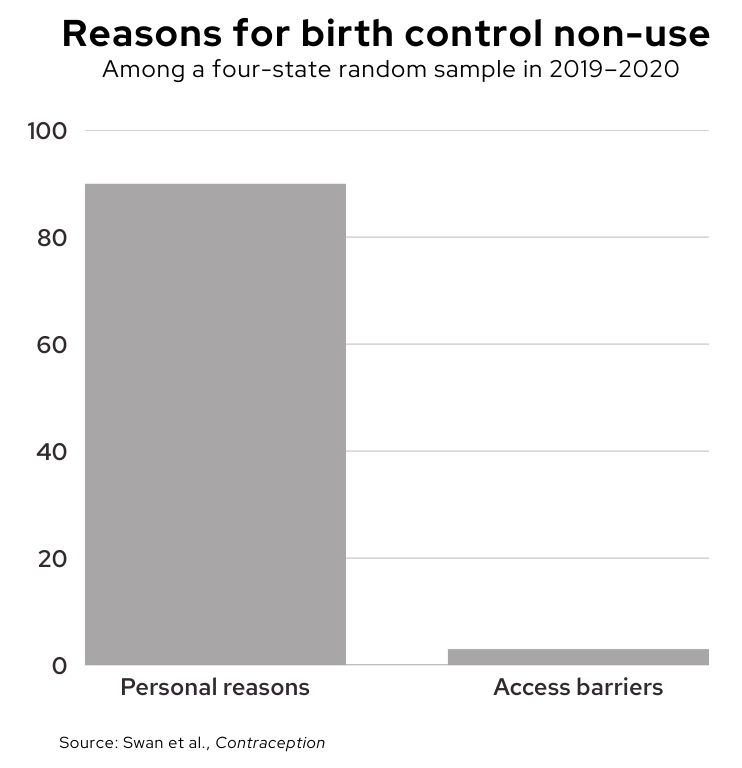 The study led by Swan found that 90% of contraceptive non-users cited personal reasons for their non-use, including infrequent sex, openness to pregnancy, or concerns about side effects. Just 3% of contraceptive non-users mentioned access barriers.
What does this study mean for care and policy?
For healthcare providers, policymakers, and advocates, these results highlight an important message: expanding contraceptive access alone isn’t enough to ensure reproductive autonomy. While access matters, counseling and policy efforts should also prioritize patient autonomy and respect for diverse preferences — including the choice not to use contraception. People’s birth control decisions are often intentional and rooted in their values, comfort, and life circumstances.
Why preferences matter
The study also found that among those who had never used LARC, personal reasons for non-use were more common than access reasons. This finding underscores the need for contraceptive care that goes beyond removing barriers and promoting highly effective methods. Providers should focus on preference-aligned contraceptive counseling that addresses patients’ concerns about side effects, comfort during procedures, and the overall user experience.
Efforts to improve contraceptive access should go hand-in-hand with strategies that help people make informed choices.
Moving toward equitable, patient-centered care
Honoring patient preferences is not a barrier to access; it is a cornerstone of equitable care, the researchers suggest. Efforts to improve contraceptive access should go hand-in-hand with strategies that help people make informed choices. Respecting autonomy is key to building trust and delivering care that truly meets people’s needs.